神创造的本能
“空中的鹳鸟知道来去的定期,斑鸠燕子与白鹤也守候当来的时令,
今天的关键经文中提到的候鸟(迁徙鸟),
迁徙时间最长的哺乳动物是欧洲、北美、
上帝也赋予人类一种本能,不是迁徙,而是崇拜。
迁徙的鸟类和动物尽管有危险和疲劳,但仍忠实而持续地进行迁徙。
Lester K. Burkholder – Womelsdorf, PA
“时候将到,如今就是了,那真正拜父的,要用心灵和诚实拜他,
摘自 10 月 2 日《溪水边》(第 29 卷,第 5 期),阿米什人灵修。
“空中的鹳鸟知道来去的定期,斑鸠燕子与白鹤也守候当来的时令,
今天的关键经文中提到的候鸟(迁徙鸟),
迁徙时间最长的哺乳动物是欧洲、北美、
上帝也赋予人类一种本能,不是迁徙,而是崇拜。
迁徙的鸟类和动物尽管有危险和疲劳,但仍忠实而持续地进行迁徙。
Lester K. Burkholder – Womelsdorf, PA
“时候将到,如今就是了,那真正拜父的,要用心灵和诚实拜他,
摘自 10 月 2 日《溪水边》(第 29 卷,第 5 期),阿米什人灵修。
哈尔滨素有东方明珠的美誉,被称为“东方小巴黎”。
97年第一次离开鹤岗的家门,
那年考试的地点设在南岗基督教堂,
98年我再次来到哈尔滨参考南京神学院入学考试,
那之后,在南京读书的7年里,我至少有8-
难道这座城市里就没有我值得留恋的地方吗?当然有。
2013年10月份我第一次回国探再次路过这座城市,
Psalm 31: 15 “ My times are in your hands.” (NIV)
(魏师母于2024年9月19日早上5点晨祷分享)
I very recently heard a sermon on these bible verses. I would like to share with you some thoughts from the pastor who preached that sermon. The pastor began his message by saying “controlling anger is a problem.” It seems to have become a bigger issue in today’s world. We see more violence, more rage, more hatred. Of course, all of us will get angry sometimes. But as Christ followers, we need to control the way we respond to our anger! Today I want to talk more about ways to respond to those who spew out their anger toward us and how it shocks us and hurts us, especially if this anger toward us is from fellow believers. It takes discipline and forgiveness to deal with anger directed toward us and the anger we ourselves feel at times and we need the help of the Holy Spirit for these situations.
When we look at James’ words, we see he is making a point, Dear Brothers, “take note of this”, “don’t ever forget”, “understand this” ……” be quick to LISTEN,” “it is BEST to LISTEN MUCH.” In other words, if we could take a few moments to recover from the hateful harsh words or hurtful actions and just think. Then James says, “slow to speak” …… “slow to become angry,” “slow to take offense”! We need spiritual understanding in our hearing
(deep listening). That takes quick obedience to God’s Holy Spirit. We have to be filled with the Spirit daily to be ready for these moments. It’s difficult to know how to respond sometimes because we are so shocked by anger. Most of the time it catches us off guard! Clearly the person showing their anger in that moment is committing a sin against us. Let’s be careful that we do not sin against them! Listening deeply, carefully, always brings a better result.
Now we want to see what James is also wanting to remind us in vs 20, “for man’s anger does not bring about the righteous life that God desires.” In other words, anger doesn’t make us GOOD, as God demands we must be. Listen to something I read about these instructions from James, “It is not enough to KNOW or even CHOOSE the right action: We must DO that action! God does not seek righteous KNOWLEDGE; He seeks righteous LIVES!” We know that FAITH without works cannot be called FAITH. Faith is more than words; it is MORE than KNOWLEDGE; it is demonstrated by OBEDIENCE. Faith produces separation
from the world and submission to God! Faith provides us with the ability to resist the devil and humbly draw near to God! James is showing us that it is possible to believe right things and yet live the wrong way. James is so kind toward the brothers in dealing with this sensitive topic, but he gives specific practical instructions to help us live an authentic Christian life. James was Jesus’ half-brother yet he referred to himself as a “servant of God and of the Lord Jesus Christ”. That’s also who we are! The challenge for us is to harmonize grace and truth with people and demonstrate Christ-like behavior. So, our goal is to project truth while also projecting grace. We stand up for what is right while also showing the love of Jesus Christ. Jesus faced a lot of angry people in his time on earth. He did not become violent or careless. But he wasn’t a doormat either! (He didn’t let people walk all over him.) He confronted his enemies. But instead of confronting with swords, daggers, threats, or insults, Jesus confronted his enemies with a forceful mixture of grace and truth.
We look to Jesus because he, better than anyone, understands anger and how to deal with being criticized or mistreated. Some of the ways Jesus dealt with difficult people
were:
1. JESUS ASKED QUESTIONS. Remember the story in Luke 12 when Jesus was challenged to settle a family dispute about the inheritance and he responded, “Man who made me a judge or an arbitrator over you?” “Watch out! Be on guard against all kinds of greed; a man’s life does not consist in the abundance of his possessions.” Jesus wanted them to understand putting material things over personal relationships has bad results! Jesus used questions to emphasize his openness to the other person. Another thing Jesus did was
2. JESUS NEVER FELT PUSHED INTO A CORNER. When the pharisees accused him of breaking the Sabbath by doing certain things Jesus wasn’t afraid of what they might think of him. That’s not his focus. Sometimes people corner us with their judgements, and we feel they misunderstand us or don’t know us. But like Jesus we don’t have to feel defined by the projections of other people. Our identity resides and is found in God, not what other people try to push on us.
3. JESUS KNEW WHEN TO IGNORE. Remember in Luke 4 when Jesus returned to Nazareth his hometown and was reading the scripture in the synagogue and said, “no prophet was accepted in his own hometown.” He told about Elijah and the widow. All the people in the synagogue were furious with Jesus. They drove him out of town and wanted to throw him off the cliff. Jesus could see there was no way to reason with these people, so he walked right through the crowd and “went on his way”. Some people throw fits, speak abusively and harshly…. many times online in today’s modern time or in text messages. This is the time to walk away. Sometimes people cannot be reasoned with, so you have no choice. With in-person confrontation you might can choose another way.
4. JESUS WAS NOT ON THE DEFENSIVE. In Mark 10 we see the request of James and John. “Teacher, we want you to do for us whatever we ask.” Jesus said, what do you want me to do? They asked to sit on Jesus’ right and left hand in Glory! They stepped over a boundary! Jesus knows when to say NO and when to say YES and doesn’t worry about making people unhappy. Sometimes people demand more from us than what we can give. They may try to give us a guilt trip. Jesus loved all people, but his goal wasn’t to please everyone. Jesus’ goal was to do the Father’s Will. God’s will for Jesus gave him his security. He didn’t have to bend over backwards to satisfy needy or aggressive people. One other way Jesus dealt with other people.
5. JESUS WAS FLEXIBLE. There’s a story in Matthew 15 about the faith of a Canaanite woman. The woman begged Jesus to heal her daughter. Jesus said, “No.” But then he was moved by her faith and heals her daughter. Jesus approaches people with an open mind. When someone difficult comes our way. We might think, Oh, no, not again! But maybe we better keep an open mind. Things might be different this time. We don’t want to shut out the Holy Spirit’s work in our own life or another person’s life.
FRIENDS WE LOOK TO JESUS FOR OUR PERFECT EXAMPLE IN DEALING WITH DIFFICULT PEOPLE AND EVERYTHING ELSE IN OUR LIVES. LIKE HIM, WE TOO, WILL BE ANGRY AND FEEL HATRED TOWARD SIN, HYPOCRISY, AND INJUSTICE. THAT IS CALLED RIGHTEOUS ANGER AND IS OK. JESUS DID NOT EXHIBIT MAN’S ANGER BUT THE RIGHTEOUS INDIGNATION OF GOD. WE LOOK TO JESUS AS OUR EXAMPLE, BUT WE ARE WEAK AND WE WILL FAIL SOMETIMES! WE MUST PRAY AND FORGIVE AND KEEP TRYING TO DO BETTER ON THE ISSUE OF ANGER.
(Mrs. Elinda West’s sharing at 5:00 am early morning prayer on September 19, 2024)
罗兰·艾伦
*作者罗兰·艾伦(1868-1947)于 1895 年至 1903 年在中国担任圣公会传教士。此后几年,他负责一个英国教区。
在《使徒行传》中,我们可以看到圣保罗布道的三个例子,
首先,圣保罗以犹太民族的过去历史为基础,
在第二部分中,他阐述了耶稣降世、遭人拒绝,
在第三部分中,他向所有接受饶恕的人宣告饶恕的信息,
这个福音与圣保罗最后一次向以弗所长老们讲话(徒20:17-
我们很容易理解,这样的福音会如何吸引圣保罗的听众。
对于那些寻求对世界、其本质和终结进行合理解释的人们,
对于那些具有高尚道德本能、
对于那些被罪恶感所压迫的人们,福音带来了饶恕和释放的保证。
对于那些受压迫的、悲伤的、绝望的人们,
对于那些被邪恶灵魂的恐惧吓坏了的人,福音揭示了一种仁慈、
对于不满于偶像崇拜的人们,福音教导他们纯洁地侍奉唯一的真神。
对于那些想象力被恩典的恐怖和黑暗所淹没的人们,
对于需要支持的弱者、被邪恶的锁链束缚的罪人、
对于孤独的人,福音提供了友好的温暖和陪伴,
一个人一旦有了信仰,他的生命就在于与基督的联合。因此,
被拒绝的可能性始终存在。圣保罗并没有在一个地方站稳脚跟,
悔改和相信是他布道的关键。悔改时,他们承认自己过去的过错;
*摘录自罗兰·艾伦 (Roland Allen) 所著《传教方法:圣保罗的还是我们的?》出版地:Grand Rapids, Michigan,出版社: Wm. B. Eerdmans Publishing Co., 2001. 62-77.
Roland Allen
Of St Paul’s preaching we have in the Acts three examples, the sermon at Antioch in Pisidia (Acts 13: 16-41), the speech at Lystra (Acts 14: 15-17), and the speech at Athens (Acts 17: 22-31). We have also five incidental references to its substances: a description given by the soothsaying girl at Philippi (Acts 16: 17), a summary of his teaching in the synagogue at Thessalonica (Acts 17: 2, 3), a not of the points which struck the Athenians in the Agora as strange made by the Town Clerk at Ephesus (Acts 19:37), and the reiteration the Ephesian elders (Acts 20: 21). Besides these, we have an account of his preaching at Corinth given by St Paul himself in his first Epistle to that Church (1 Cor 2: 2). These accounts are naturally divided into two classes: the preaching in the synagogue, and the preaching to the Gentiles.
The sermon is divided into three parts by dramatic appeals to the attention of his hearers.
In the first, St Paul builds upon the past history of the Jewish race and shows that his Gospel is rooted there, that in his message there is no casting away of the things familiar, no denial of the truth of the old revelation made to the Fathers; but rather that the whole history of Israel is the divinely ordered preparation for the new revelation in the Messiah.
In the second, he sets forth the facts of the coming and rejection of Jesus and His consequent crucifixion. Here it is startling with what simple and unhesitating directness St Paul faces at once this great difficulty, the difficult with has at all times everywhere been the most serious hindrance in the way of the acceptance of the Gospel—the rejection of the missionary’s message by his own people. He does not shrink from it, it does not apologize for it, he does not attempt to conceal weight. He sets it forth definitely, clearly, boldly; he makes it part of his argument for the truth of his message. It is the fulfilment of prophecy. Then he produces his conclusive proof, the Resurrection, witnessed by the apostles, foretold by the prophets, the fulfilment of the promise.
In the third part, he proclaims his message of pardon for all who will receive it, and utters a solemn warning of the consequences which will follow its rejection.
We may see here five elements and four characteristics of St Paul’s preaching in the synagogue. The five elements are there:
This Gospel accords perfectly with the account with St Paul gives of his preaching in his last address to the Ephesian elders. The main elements include: The nature of God, one, living, personal loving; the facts of the life of Jesus Christ, the Son of God, the death, the resurrection: the meaning and their power to supply the spiritual needs of men; the folly of idolatry; the way of salvation: repentance and faith; the doctrine of the kingdom; the nearness of judgment.
We can easily understand how such a Gospel would appeal to the minds of St Paul’s hearers. To those who, among the conflicting claims and confused teachings of polytheism, were seeking for some unity in the world nature and of thought, St Paul brought a doctrine, at once simple and profound, of one personal God living and true, the Creator of all.
To men who sought for some intelligent account of the world, its nature and its end, St Paul revealed a moral purpose in the light of which all the perplexities, uncertainties, and apparent contradictions, resolved themselves into a divine harmony.
To men of high moral instincts, appalled and dismayed at the impurity of society around them, St Paul offered the assurance of a moral judgment.
To men oppressed by the sense of sin he brought the assurance of pardon and release.
To the downtrodden, the sad, the hopeless, he opened the door into a kingdom of light and liberty.
To those who were terrified by the fear of malignant spirits he revealed a Spirit benignant, watchful and ever present, all-powerful and able at a word to banish the power of darkness.
To men dissatisfied with the worship of idols he taught the pure service of one true God.
To people whose imaginations were overwhelmed by the terrors and darkness of the grace he gave the assurance of a future beyond the grace in the bliss and peace of the Risen Lord.
To the weak who needed support, to sinners bound with the chain of vice, to people unable to cope with the depressed morality of their heathen surroundings, he brought the promise of an indwelling Spirit of power.
To the lonely he offered the friendly warmth and society of a company all eagerly looking forward to a bright day when Grace would come and this world with all its perplexities and troubles pass away. It is no wonder that this Gospel of St Paul appealed to men, fired their imaginations, filled them with hope, and strengthened them with power to face persecution.
The moment a man had faith, life for him consisted in union with Christ. Consequently, it meant the acceptance of a new source of life. It meant dependence upon Christ for the supply and maintenance of life. It meant the abandonment of the old conception of life, nay, or the very life itself as he before knew it. It meant the casting away of all the former things.
The possibility of rejection was ever present. St Paul did not establish himself in a place and go on preaching for years to men who refused to act on his teaching. When once he had brought them to a point where decision was clear, he demanded that they should make their choice. If they rejected him, he rejected them. The ‘shaking of the lap’, the ‘shaking of the dust from the feet’, the refusal to teach those who refused to act on the teaching, was a vital part of the Pauline presentation of the Gospel. He did not simply ‘go away’, he opened rejected those who showed themselves unworthy of his teaching. It was part of the Gospel that men might ‘judge themselves unworthy of eternal life’. It is a question which needs serious consideration whether the Gospel can be truly presented if this element is left out. Can there be a true teaching which does not involve the refusal to go on teaching? The teaching of the Gospel is not a mere intellectual instruction: it is a moral process, and involves a moral response. If then we go on teaching where that moral response is refused, we cease to preach the Gospel; we make the teaching a mere education of the intellect. This is why so much of our teaching of the Gospel in schools and zenanas is ineffective. We teach, but we do not teach morally. We do not demand moral response. We are afraid to take the responsibility which morally rests upon us of shaking the lap. We should refuse to give intellectual teaching to a pupil if he refused to give us his attention: we might equally refuse to give religious teaching to a pupil who refused to give us religious attention.
Repentance and faith are the keynotes of his preaching. In repentance they confess their past wrongdoing; in faith they find forgiveness as members of Christ’s Body. In repentance they recognize the weakness; in faith they find strength by the administration of the Spirit of Christ. In repentance they confess the way in which they have walked is a way of death; in faith they find in the Kingdom of Christ the way of life. In repentance they break with a sinful world; in faith they enter the Church.
约10: 10……我来了,是要叫羊得生命,并且得的更丰盛。
至高者在人的国中掌权,要将国赐与谁,就赐予谁,或立极卑贱的人执掌国权。——但以理书 4:17
随着美国下一任总统竞选活动的势头越来越猛,人们常常自由地表达对候选人资格的个人意见。那些确信自己的选择比对手更好的人,这些评论常常演变成严厉的批评。不幸的是,这种倾向在那些自称信奉基督教的人中经常出现。
两个多世纪前,在第二次美国总统大选前不久,一家报纸诋毁约翰·亚当斯为“一个彻头彻尾的伪君子,一个最令人震惊的傻瓜,一个无知和残暴、欺骗和软弱的奇怪混合体”。亚当斯是《独立宣言》的签署人之一,在华盛顿总统的领导下,他曾担任英国和法国的能干外交部长。他从不回应对他人格的诽谤;在成为第二任总统后,亚当斯在为美国服务了四年的杰出时期默默地取得了优异的成绩。
虽然许多政府官员的资格和品格似乎值得怀疑,但我们有多少次为他们祈祷而不是责骂他们呢?保罗写道:“我劝你们……要为万人祷告、代求、祝谢;为君王和一切在位的,也该如此,使我们可以平安无事地度日。”(提摩太前书2:1-2)一切权柄都是上帝赐予的。
作为基督徒,我们投票的最好方式是下上膝盖的功夫(指祷告),而不是在投票箱里,总是要真诚地说:“不要照我的意思,只要照你的意思。”(马太福音 26:39)上帝的决定永远不会被投票所推翻。 彼得·刘易斯——俄勒冈州哈尔西
万军之耶和华既然定意,谁能废弃呢?他的手已经伸出,谁能转回呢?- 以赛亚书 14:27
引自 9 月 7 日的《溪水旁》,阿米什人的灵修
温馨提醒:本灵修文提醒弟兄姐妹,请迫切为美国总统大选代祷,并鼓励有权投票的弟兄姐妹积极投票!
The most High ruleth in the kingdom of men, and giveth it to whomsoever He will, and setteth up over it the basest of men. – Daniel 4: 17
As the campaign for the next president of the United States gathers momentum, personal opinions are often freely expressed about the qualifications of the candidates. The comments frequently degenerate into severe criticisms by those who are positive that their choices are better than the opponents. Unfortunately, this tendency all too often is found among those who profess Christianity.
A little before the second US presidential election over two centuries ago, a newspaper vilified John Adams as “a gross hypocrite, one of the most egregious fools, and a strange compound of ignorance and ferocity, and of deceit and weakness.” Adams was one who had signed the Declaration of Independence, and under President Washington he had served as an able foreign minister to both England and France. He never responded to his character assassins; and after becoming the second president, Adams quietly proceeded to excel during four years of distinguished service to the American nation.
While the qualifications and character of many public officials may seem questionable, how often do we pray for them instead of berating them? Paul wrote, “I exhort therefore, that … prayers, intercessions, and giving of thanks, be made for all men; For kings, and for all that are in authority; that we may lead a quiet and peaceable life” (1 Timothy 2: 1-2). All authority is delegated by God.
The best way we as Christians can vote is on our knees, not in the ballot box, always including an earnest, “Not as I will, but as thou wilt” (Matthew 26: 39). God’s decisions can never be defeated by voting. Peter Lewis – Halsey, OR
The Lord of hosts hath purposed, and who shall disannul it? And his hand is stretched out, and
who shall turn it back? – Isaiah 14: 27
Cited from Sept. 7, Beside the Still Water, Amish Devotion.
Friendly reminder: This devotion reminds us to pray earnestly for the Presidential Election and encourages us to vote if we can!
许多许多的人在断定谷,因为耶和华的日子临近断定谷。——约珥书 3:1
在弯曲的乡村道路上遇到松鼠是很常见的。当你开车时,
上帝赋予了这只可爱的小啮齿动物很多生存意识,
我的妻子最近就有过这样的经历。她遇到的那只松鼠很幸运,
这种情况很像决定是否跟随基督。人除非呼求主的名,
唐·里德——田纳西州格林维尔
无论你决定与否,都将有着永恒的决定性。
—— 译自《溪水边》第二十五日(样本), 阿米什人灵修。
Multitudes, multitudes in the valley of decision: for the day of the Lord is near in the valley of decision. – Joel 3: 14
Don Reid – Greeneville, TN
Whether you decide or don’t decide will be eternally decisive.
Cited from Day 25, Beside the Still Water(Sample Issue), Amish Devotion.
启14: 13 我听见从天上有声音说:“你要写下:从今以后,
来11:4 ……他虽然死了,却因着信仍旧说话。
赵桂芹(1960年1月1—2024年8月16日)出生于黑龙江省鹤岗市新华镇永利村,是我家的老邻居。小时候,一抬起头就能看见她家烟囱里做饭时所冒出的徐徐炊烟。
赵桂芹为人谦和、好客、尊老愛幼,总是笑脸迎人,村里的男女老少都很喜欢她。与我年龄相仿的同辈都亲切地称呼她“二姐”(以下统称“二姐”)。后来由于她在教会衷心的服侍而被按立为长老,从此弟兄姐妹都称呼她“长老”或“赵长老”。记得在92年时,二姐拿了一份手写的信仰见证给我看。大致内容是这样的:
二姐和二姐夫妻婚后有两个可愛的孩子。她有病的时候,一个孩子在吃奶,另一个孩子刚会走路。她得的是骨结核,股骨头坏死,还有倒食病。为了治病,她不得不拜各种偶像,烧香求仙,找人算卦。一次算命先生赵瞎子说她丈夫头上有妖魔鬼怪,就让二姐在二姐夫睡觉的那个位置挖地三尺,埋个镜子。因为二姐夫在外面开车挣钱,怕二姐夫生气,她就找她弟弟偷偷把水泥地刨开,将镜子埋在里面。她尝试过各种稀奇古怪的方法但都无法治愈她的疾病,反倒越来越严重。她上北京去看病也看不好,还差点儿被骗子骗了。大约在1989,她二姑在鹤立带她去求一个行巫术的小脚老太太给她看病。老太太说:“哎呀,这孩子没救了”,不给她看。她出来了就哭。后来她二姑说,那实在没法儿就把她送到北头建立的教会吧,听人说教会能救人。二姑也不信,就是没办法了才带她去找教会的。到了教会,大家敬拜完了,她坐在教会一直哭。散会时,有人问她哭什么。她说她要死了,还有俩个孩子。后来教会有人把福音传给她。她说她拜了许多神也没好使。传福音的人说:“你拜的那些都是假神,唯有独一的上帝是真神,就像我们中国人说的老天爷一样”。传福音人还说:“你要信了主,就算病不好,灵魂也能上天堂,再也不遭罪了”。所以,她就信了。她非常虔诚,有时跪在东北的雪地里祷告。当时,她天天呼求上帝,哪怕让她看到她的孩子长到10岁都行,(可没成想今年她的外孙子都14岁啦!)结果神不但让她痊愈了,后来还大大地使用了她。这之后她的身体没得过什么大病,直到去年”。
二姐是第一个将基督的福音清清楚楚地讲给我的人。人们常说,那时中国的基督徒中有“三多”:老人多,病人多,妇女多。多数人信主带着功利主义色彩,为了吃饼得饱,病得医治,家里得平安等。每周三晚、周五晚、周日晚聚会,由沈旭春(已归天家)大叔读材料。我当时的先天性心脏病出现了心衰的状态。我刚去教会时也是抱着治病和怀疑的态度。有一次散会后,她讲到:“世界上的每个人都是罪人,我们都从亚当那里继承了原罪。我们每天又会犯撒谎,骂人,嫉妒,偷窃等罪。慈愛的上帝为了拯救我们脱离罪恶,将他的独生儿子赐给我们。耶稣为我们的罪被钉死在十字架上,并且第三天从死里复活。我们只要愿意承认自己是罪人,接受耶稣基督作救主,我们的罪就能得到赦免,并且我们可以因信耶稣得到永生上天堂”。她讲的福音让我豁然开朗,明白信主的真正意义。在我们家妈妈和姐姐刚信主时经历许多苦难,哥哥在学校里玩儿雷管把手指头炸掉了。她们的信心软弱了。二姐到我们家来把主的真道讲给我们听,她说:“我们信主的人不是一帆风顺的,主许可我们遇见各样的苦难和考验。但无论我们经历怎样的苦难,主都会与我们同在”。她的话让我隐约记得,原来信主不是确保我们一切顺利,而是在考验中有主的同在。
二姐是建立教会的人。上帝使用保罗在腓利比建立的第一间教会是通过一位姐妹吕底亚(徒16:15)。二姐小学毕业(初中读一年),却蒙主使用建立教会。她家从前经营小卖店(那时农村的小卖店在当地人的生活中扮演着重要的角色。在小卖店里面,主要售卖零食和日杂用品等,它的存在可以满足大部分农村人的需求),信主后就把小卖店奉献出来作家庭聚会点,俗称“炕头聚会”。有6-7个人开始在她家里聚会。来聚会的人数时起时落。一旦有哪位信主的弟兄姐妹遇到苦难,一批人就不来聚会了。再过一段时间,教会又慢慢发展起来。刚开始时,二姐从各地方弄来学习材料,包括十条诫命、主祷文、要道问答等,大家在一起读。逐渐地,开始有唱诗歌,背使徒信经,读经、读属灵的材料,祷告、诵读主祷文等。二姐组织教会各样活动,逢年过节排练福音节目,包括快板、舞蹈、相声、福音短剧等。除了在教会里演,还到周边各个村子的大街上演,为主传福音。
福音在村子里产生了巨大的影响,“叫人们的眼睛得开,从黑暗中归向光明,从撒旦权下归向神”(徒26:18)。当时,许多人弃掉偶像,跟从了真神。福音给了全村希望和力量,使许多人疾病得医治,生活有盼望,使没有太多文化的人每天可以通过读经祷告寻求真理,增长知识。福音使从前评头论足、说长道短的家庭妇女学习悔改的道,唱诗赞美,追求永生。福音也使许多冬天抽烟喝酒打麻将赌博的男士们离开陋俗,到教会里敬拜主。在节日时,以福音的形式扭秧歌,积极向上,过属灵的生活。福音改变了人们行丧礼的风俗。传统的中国农村,人死时八叩九拜,大动干戈,烧牛烧马烧纸钱,吊丧的声音让人毛骨悚然。人们信主后,采取基督教的仪式简化丧礼,在丧礼时有诗班赞美,祈祷、讲道等。这既庄重肃穆、卫生清洁,又见证了主的圣名。
2000年,在鹤岗市许多教会的协助下,弟兄姐妹同心协力建立了一座伯特利教堂。那是全村甚至在新华镇十二个农村中最好的建筑。周边的许多地方,包括永安、三连、四连、五连、六连、七连、八连、十连、鹿场等地的弟兄姐妹都来这里聚会。2020年新冠以来,由于种种原因,那座教堂没有被使用。主说,“建造有时、拆毁有时”。当时主借着二姐等弟兄姐妹建教堂彰显神的荣耀。后来,尽管人们无法在教堂聚会,然而教堂已经深深进入每个人的内心。外在的十字架被拆毁了,但人们内心里一座座十字架却被树立起来。30多年来,一座座属灵的教堂在许许多多弟兄姐妹的生命中建造起来了。教会不是教堂建筑,而是信徒的聚集。建造教会的过程从无形到有形,再从有形到无形,最后基督徒要一同被带入永恒的天国——完全的灵性世界。二姐说:“感谢主一步一步的带领。从前有教堂时聚会人数寥寥无几,后来没有教堂每次聚会至少70-80人,并且每个人都非常火热愛主,信心满满。这都是神的作为!”
二姐是祷告和赞美的人。在农村老家时,二姐常作晨祷,每早4点多一个人(有时一两位阿姨陪伴)去教堂祷告赞美,每次至少一个半小时。她还组织晚上的晚祷会。她一天至少花3-5个小时在祷告和赞美上。她的祷告内容很宽广,上至世界和平、国家各个部门领袖、各地教会兴旺福音,下至每个弟兄姐妹的家人健康平安、孩子升学考试等。主使用她的祷告大有能力,和牧者同工一起医病赶鬼,探访病人,使多人得到益处。我93年被污鬼附身时,二姐每晚到我家祷告,与魔鬼争战,最终得胜,使我得到痊愈和释放。她一直用祷告拖住我多年的服侍。我无论走多远,都离不开她和众弟兄姐妹代祷的力量。尤其是在新冠期间,当面临教堂重启的种种拦阻和攻击时,她和家乡教会弟兄姐妹的代祷使我战胜挑战、度过难关。她常为弟兄姐妹禁食祷告,少则一两天、多则三五天。
二姐的女儿明明说:“病情恶化期间她从未停止过祷告,每天多疼痛都坚持记录笔记和宣告祷告。她把神家的事永远放第一位。生活地上的这个小家,去外地女儿家住从来不超过七天。在女儿家住几天就呆不住啦,着急回家探望体弱多病的老年人,惦记教会的每一位需要服侍的弟兄姊妹们。每天晚上她都是把每个群里的工作都检查完毕,每位代祷的都看一遍,两部手机十几个群每个都认真看一遍。每晚几乎都是跪着在主怀里睡着的。无数个半夜我们看到妈妈都是跪在被窝里祷告。她的生活真的是24小时离不开上帝!刚化疗她得知家乡一位主内老人去世,她凌晨惦记老人的葬礼,因为老人之前和她说过要按教会办丧礼。她痛哭流涕的央求老人的儿子满足老人的心愿。她不顾自己的身体,特别激动。每天她的房间都是听道赞美的声音。后期下半身截瘫大小便失禁,她还用手舞赞美神、鼓掌荣耀神”。
二姐是很有愛心的人。主将神国的大愛放在二姐心里。她不仅愛自己的丈夫、儿女,家人,还愛教会的每位弟兄姐妹,神学生,牧者同工等。尽管家庭并不富裕,但她却常常慷慨奉献给神学生、牧者、贫困弟兄姐妹等。她对人最大的愛是把福音传给人。主使用她带领娘家和婆家人40人左右信主。她教育儿女要善良,让孩子从小给村里的孤寡老人常年送饭打扫屋子。
从某种程度说,二姐并不是一个刚强的人。她胆子很小,就像士师基甸一样。从前她很怕在众人面前讲话、开口祷告或见大人物,但后来靠着圣灵都一一克服了这个困难。
在确诊肺癌之后,她没有一次因为得这个病掉过眼泪和惧怕过。在家人面前一次也没有哭过。她从来都是安慰我们说:“没事儿,妈没事儿”。主的大能正在软弱的人身上彰显出来。如果她自己胆子大、能力大,那么她一定会很骄傲。然而,主却使用软弱谦卑的人,成就主的大能和作为,使凡有血气的人没有一个可以在神面前夸口。
一次,我和一位慕道友分享自己是通过二姐传福音信主的。这位慕道友问:“这位二姐没上过神学,她如果对圣经领悟偏了怎么办?” 我的回答是:“我们每个人,包括牧师在内,对主的理解都有局限性。但感谢主的是,圣灵一直在帮助我们。在我们信仰的路上,真理的圣灵会不断纠正调整我们,使我们不断走在主的正路上。最重要的是,人在神学的理解上可以不断学习,只要人口里认耶稣基督为主,心里信主死里复活,认罪悔改,并且高举赞美神的圣名,他就得着了。”
不经苦难,不得完全。主耶稣“他虽为儿子,还是因所受的苦难学了顺从。他既得以完全,就为凡顺从他的人,成了永远得救的根源”(来5:8-9)。这并不是说主耶稣从前不顺服、但经过苦难之后才学会了顺从,而是说他在经过十字架苦难时的顺从彰显和见证了他人性的完全。二姐在人生最后阶段得了小细胞肺癌。在这个过程中,她受了许多苦。她小时候最怕扎针。但在受苦时不得不面对医院里的化疗和放疗。她经历许多身体的疼痛。最后,她连水也喝不进去。但每用针管扎进去一点点水时,她都使劲仰起头,像甩过去一样。每咽进一点儿水,她都说“哈利路亚”“感谢主”。她真的没有埋怨神。她只要能开头说话就是赞美主。她喜欢吹巴乌(一种自由簧乐器,她曾带着有些姐妹常在教会聚会或节日、婚礼、丧礼上吹奏巴乌赞美主,传福音)。她说:“我真想再为主吹一次巴乌,但我吹不动了”。她患病过程中,家人们尽上所有本分,西医中医能用的办法都使用过了,弟兄姐妹也做了无数的代祷。但主是有主权的上帝,他知道对二姐和众人来说最好的是什么。从二姐的受苦中,我们学会了靠主坚强的功课。从中我们领悟到,只有经过各各他山才能来到空坟墓;只有受到十字架的对付,才能彰显复活的荣耀;“我们这至暂至轻的苦楚,要为我们成就极重无比、永远的荣耀”(林后4:17)。
主说:“一粒麦子若不落到地里死了,仍旧是一粒;若是死了,就结出许多籽粒来”(约12:24)。主借保罗说:“论到睡了的人,我们不愿意弟兄们不知道,恐怕你们忧伤,像那些没有指望的人一样。我们若信耶稣死而复活了,那已经在耶稣里睡了的人,神也必将他们与耶稣一同带来。我们现在照主的话告诉你们一件事:我们这活着还存留到主降临的人,断不能在那已经睡了的人之先。因为主必亲自从天降临,有呼叫的声音和天使长的声音,又有神的号吹响,那在基督里死了的人必先复活, 以后我们这活着还存留的人必和他们一同被提到云里,在空中与主相遇;这样,我们就要和主永远同在。所以,你们当用这些话彼此劝慰”(帖前4:13-18)。林前15:35-44也说:“或有人问:‘死人怎样复活,带着什么身体来呢?’无知的人哪!你所种的,若不死就不能生。 并且你所种的不是那将来的形体,不过是子粒,即如麦子,或是别样的谷; 但神随自己的意思给它一个形体,并叫各等子粒各有自己的形体。 凡肉体各有不同:人是一样,兽又是一样,鸟又是一样,鱼又是一样。 有天上的形体,也有地上的形体;但天上形体的荣光是一样,地上形体的荣光又是一样。日有日的荣光,月有月的荣光,星有星的荣光,这星和那星的荣光也有分别。 死人复活也是这样:所种的是必朽坏的,复活的是不朽坏的;所种的是羞辱的,复活的是荣耀的;所种的是软弱的,复活的是强壮的; 所种的是血气的身体,复活的是灵性的身体。若有血气的身体,也必有灵性的身体”。在上周日8月11日,我和二姐视频时看到她脸上的荣耀。我惊叹:“那不是地上人的脸,那分明是属天的荣耀!”我们在主里去世的人有复活的盼望!
二姐的妹妹赵贵红分享到:“在她生命的晚期,无论多难受她也没有停止安排教会的服侍,哪天聚会,哪天干什么,该叫哪个人来聚会,到哪里去探访,她都一一嘱咐好。她走的时候跟我说,三天之内,要么神医治、要么神接走。第三天神把她接走了。她当跑的路已经跑完了,当打的仗也打过了,当守的道也守住了,必有荣耀的冠冕为她存留。她息了地上的一切的劳苦愁烦,一切的疼痛和痛苦。
在临走头一天她还给我们讲了一个笑话,她从15岁就到农村生产队里去上班。她特别喜欢手表,就在玩具店买了一个小手表带着去上班。其他工人问她说:‘哎呀,你这表真好看’。她说:‘那是,可好看了!’‘我把他们全忽悠了,后来他们发现我的表不走字,就问我为什么。我就说,‘我的表是夜光的,到晚上才能看见’。两年后,玩具表上锈了,然后就扔掉了。一直到现在她也没有买过。其实,听着是个笑话,家人心里却都很难受。她这辈子从来没为自己买过什么,她把家人和别人的需要都满足了,最后就差自己了。她临走时教会给她买了一块表,她非常喜欢。她说她走不穿别的衣服,就穿婚纱。她是穿着婚纱走的,因为她知道耶稣要来迎娶她。”
明明说:“她离开那天一直笑,翻身笑,喝水也笑,全天没有疼痛,特别享受地睡着。翻身就说,‘睡的真得劲儿’!嘴里不停的说‘阿门’、‘感谢主’,我们以为是止疼药的作用使她昏睡,其实是她已经奄奄一息在努力地活着,我们从医院往家走,先到鹤岗市的楼上。一路上,她一直笑着说:‘我好了,好啦!’在车上,我俩有说有笑。她特别美,特别舒服,到楼上她就不行了,抢救了一会儿,她还和老姨说‘阿门’,还努力的挤出笑容,家人就给她往永利的老家送。我们一边喊她让她坚强挺到家、一边给她打上强心剂。我和弟弟还有老姨在回家的一路上不停的大声
二姐的外甥女儿崔伟分享到:“感谢神将这么好的二姨长老放在我生命中。她的生命深深地影响了我。我从小一放暑假就到二姨家。每次到她家都看到她趴在炕上整理讲道材料,铺满了一炕,笔记本上密密麻麻地写满了那么多的字。每次去她家都看到她在读圣经,要不然就是拿着手机和别人交通、服侍别人。最后一次散会后路过十连,她在路上和我姐(二姐的女儿明明)说:‘我要去十连探望一个老人’。圣灵在带领她,正好走到十连的路口就看到两个老人。其中一个推着另一个在轮椅上。他们和二姨说:‘我以为你们教会不要我们了呢’。她一直把事奉主放在最重要的位置,即或自己身患重病也从未停止过。她在得癌症的一年里,从未间断过赞美。她无论遇到谁都说主有主的美意。她追思礼那天摆满了鲜花,十里八村来了好多人,85岁的长老为她追思祝福,送行的人哭着跟着灵车走了很远。乡亲们都说这是从来没有过的隆重。世上有权有势的人很多,但又有几个人去世时别人会为他落泪呢。从今以后,我们要更加愛主,祈祷和赞美”。
明明补充到:“从她生病期间,许多弟兄姊妹无时无刻为她痛哭流涕的祈祷。太多的别人家的孩子称她为“赵妈”或“桂琴姥姥”……她给过许多孩子们自信和鼓励。小到几岁孩子老至百岁老人,都依赖她、喜欢她!有位孩子说:‘这几天每每想起阿姨都是她那充满爱意的笑容,这是我成长过程中她给予我的美好……’还有孩子发朋友圈说:‘小时候回农村,阿姨看到我就会说:‘美丽,上帝祝福你,主与你同在’……从小到大,在她眼里美丽总是那么好……她爱自己的孩子是人,爱别人的孩子是神……愿另一个空间里没有苦难与病痛,只有喜乐与平安……❤”
电影《辛德勒名单》中说:“拯救了一个人,就是拯救了全世界”。我深信,主借着二姐影响了全世界。主借着她和许多长辈将福音传给我,我可以把从她和长辈们那里领受的福音在美国和弟兄姐妹分享。然后,领受我们所传福音的人再接着往下传……这样福音便会传遍地极,直到主再来的日子!愿荣耀归与圣父、圣子、圣灵三位一体的真神!阿门!
(感谢天父带领写作本文;也感谢王海霞牧师,牟明娜,赵桂红,赵桂华,崔伟,李春艳提供相关信息)
Revelation 14:13 And I heard a voice from heaven say, “Write this: Blessed are the dead who die in the Lord from now on!” “Yes,” says the Spirit, “that they may rest from their labors, for their works will follow them.”
Hebrews 11: 4 …Though he is dead, he still speaks through this faith.
Zhao Guiqin (January 1, 1960 – August 16, 2024) was born in Yongli Village, Xinhua Town, Hegang City, Heilongjiang Province. She was an old neighbor of my family. When I was a child, I could see the smoke coming out of her chimney when she was cooking. Zhao Guiqin was modest, and hospitable; she respected the elderly and loved the young. She always welcomed people with a smile. Men, women and children in the village like her very much. My peers of similar age affectionately call her “Second Sister.” Later, she was ordained as an elder because of her faithful service in the church. From then on, the brothers and sisters called her “Elder” or “Elder Zhao.” I remember that in 1992, Zhao showed me a handwritten testimony of faith. The basic content is as follows:
Zhao and her husband married and had two lovely children. When she was sick, one child was nursing while the other was just beginning to walk. She suffered from bone tuberculosis, femoral head necrosis, and anorexia. In order to cure her illness, she had to worship various idols, burn incense, and seek fortune-telling. Once the fortune teller Zhao Xiazi (xiazi means a blind man) told her that there were monsters on her husband’s head, so he asked Zhao to dig three feet into the ground and bury a mirror where her husband slept. Because her husband was driving outside to make a living, she was afraid that her husband would be angry, so she asked her brother to secretly dig up the cement floor and bury the mirror inside. She tried all kinds of weird methods but none of them could cure her disease, and instead it got worse. She went to Beijing to see a doctor but she didn’t get a good result, and she was almost deceived by a scammer. Around 1989, her second aunt took her to seek treatment from an old lady with small feet who practiced witchcraft in Heli Town. The old lady said, “Oh, this child is hopeless” and refused to help her. She cried when she came out. Later, her second aunt said that if there was no other way, she could send her to the church established in north side of the town. Some people said that the church could save people. The second aunt didn’t believe it either, so she took her to the church because she had no choice. When they arrived at the church, everyone had finished worshiping, and she sat in the church and cried all the time. When the meeting ended, someone asked her why she was crying. She said she was dying and had two children. Later, someone from the church shared the gospel with her. She said she had worshiped many gods but nothing worked. The evangelist said: “Those gods you worship are all false gods. We worship the only true God, just like what we Chinese call Lao Tian Ye (Lao Tian Ye means Heavenly Grandpa).” The evangelist also said: “If you believe in the Lord, even if you are not well, your soul can go to heaven and you will never suffer any more.” So, she believed it. She was very pious and sometimes knelt in the snow in the northeast to pray. At that time, she cried out to God every day, asking God to let her see her child grow up to 10 years old. (But she never expected that her grandson is already 14 years old this year!) As a result, God not only healed her, but also used her greatly later. She didn’t have any serious health problems after that until last year.”
Zhao was the first person who clearly told me the gospel of Christ. People often say that there were “three excesses” among Christians in China at that time: many were old people, many were sick, and many were women. Most people believe in the Lord with utilitarianism, that is to satisfy their physical needs, to be healed of illness, to have peace at home, etc. We met every Wednesday night, Friday night, and Sunday night, and Uncle Shen Xuchun (who has passed away) read the spiritual materials. At that time, I had congenital heart disease and was in a state of heart failure. When I first went to church, I also had a therapeutic and skeptical attitude. After one meeting, she said: “Everyone in the world is a sinner. We all inherited original sin from Adam. Every day we commit sins such as lying, swearing, jealousy, stealing, etc. To save us, the loving God gave His only begotten Son Jesus Christ to us. He died for us on the cross and rose again from the death on the third day. As long as we are willing to admit that we are sinners and accept Jesus Christ as our Savior, our sins can be forgiven, and we can receive eternal life in heaven through faith in Jesus.” The gospel she shared made me understand the true meaning of believing in the Lord. Our mother and sister experienced many hardships when they first believed in the Lord. My brother blew up his finger while playing with a detonator in school. Their faith weakened. Zhao came to our house to tell us the Lord’s true way. She said: “It is not always smooth sailing for our believers in the Lord. The Lord allows us to encounter all kinds of sufferings and tests. But no matter what kind of suffering we go through, the Lord will be with us.” Her words made me vaguely remember that believing in the Lord is not about ensuring that everything goes well for us, but about having the Lord’s presence during trials.
Zhao was the one who the Lord used to build his church. The first church God used Paul to establish in Philippi, Europe was through a sister named Lydia (Acts 16:15). Zhao graduated from elementary school (one year of junior high school), but was used by the Lord to establish a church. She used to run a small store (at that time, small stores in rural areas played an important role in the lives of local people. In the small store, people can purchase snacks and daily necessities, etc., and its existence could meet the needs of most rural people). After believing in the Lord, she dedicated the small store as a family gathering point, commonly known as “Kangtou gathering” (Kangtou is a special kind of bed in northeastern China. People sat on Kangtou to have a gathering). 6-7 people began to gather at her home. The number of people who came to the gathering fluctuated. Once a believer in the Lord encountered suffering, a group of people would not come to the gathering. After a while, the church slowly developed again. At the beginning, Zhao got study materials from various places, including the Ten Commandments, the Lord’s Prayer, and the Catechism, and everyone read together. Gradually, they began to sing hymns, recite the Apostles’ Creed, read the Bible, read spiritual materials, pray, recite the Lord’s Prayer. Zhao organized various church activities and rehearsed gospel programs during festivals, including clapper talk, dance, crosstalk, gospel skits. In addition to performing in the church, we also performed on the streets of surrounding villages to spread the gospel for the Lord.
The gospel had a huge impact in the village, “to open people’s eyes, to turn them from darkness to light, and from the power of Satan to God” (Acts 26:18). At that time, many people abandoned idols and followed the true God. The gospel gave the whole village hope and strength, and cured many people physically and spiritually, giving them hope in life. It enabled people with little education to seek the truth and increase knowledge through reading the Bible and praying every day. The gospel enabled housewives who used to gossip and criticize others to learn the way of repentance, sing hymns of praise, and pursue eternal life. The gospel also enabled many men who played mahjong and gambled in winter to abandon their bad habits and go to church to worship the Lord. During festivals, they did a kind of China northeastern dance, called “Yangge” in the form of the gospel, were positive and lived a spiritual life. The gospel changed people’s customs of funerals. In traditional Chinese rural areas, when someone died, they would kowtow eight times and bow nine times, make a big fuss, burn paper cows, paper horses, and burn paper money, and the sound of mourning was creepy. After believing in the Lord, people adopted Christian rituals to simplify funerals, with choirs singing, praying, and preaching at funerals. This is both solemn and dignified, hygienic and clean, and it also bears witness to the holy name of the Lord.
In 2000, with the assistance of many churches in Hegang City, brothers and sisters worked together to build a Bethel church building. It was the best building in the whole village and even among the twelve villages in Xinhua Town. Brothers and sisters from many surrounding places, including Yong’an, Sanlian, Silian, Wulian, Liulian, Qilian, Balian, Jiulian, Shilian, Luchang and other places, come here to gather. Since the COVID-19 outbreak in 2020, that church has not been used due to various reasons. The Lord said, “A time to build and a time to tear down.” 20 years ago, the Lord used her and other brothers and sisters to build a church to demonstrate the glory of God. Later, although people could not gather in church, the church penetrated deeply into everyone’s heart. The external cross was torn down, but the crosses in people’s hearts were erected. Over the past 30 years, spiritual churches have been built in the lives of many brothers and sisters. A church is not a church building, but a gathering of believers. The process of building the church goes from invisible to tangible, and then from tangible to invisible. Finally, Christians will be brought together into the eternal kingdom of heaven—the complete spiritual world. Zhao said: “Thank you for the Lord’s step-by-step guidance. In the past, when there was a church building, only a handful people attended the gatherings. Now at least 70-80 people attended each gathering, and everyone loved the Lord very passionately and was full of faith. This is all from God.”
Zhao was a person who prayed and praised. When she was in her hometown in the countryside, she often prayed in the morning. She would go to the church to pray and praise at 4 o’clock every morning alone (sometimes accompanied by one or two older sisters), and each time would last at least an hour and a half. She also organized evening prayer meetings in the evening. She spent at least 3-5 hours a day praying and praising. The content of her prayers is very broad, ranging from world peace, leaders of various departments of the country, and the gospel spreading in churches everywhere, to the health and safety of each brother and sister’s family, and the children’s entrance exams. The Lord used her prayers with great power, and together with pastors and co-workers, she healed the sick and cast out demons, visited the sick, and benefited many people. When I was possessed by an evil spirit in 1993, Zhao came to my house every night to pray, fight the devil, and finally won, so that I was healed and released. She has been using prayer to support my serving for many years. No matter how far I go, I cannot do anything without the power of her and the brothers and sisters’ prayers. Especially during the COVID-19 period, when faced with various obstacles and attacks on the church’s reopening stage, her and the brothers and sisters’ prayers in my hometown church enabled me to overcome challenges and get through the difficulties. She often fasted and prayed for her brothers and sisters, sometimes for one or two days, sometimes for three to five days.
Zhao’s daughter Mingming said: “During the period when her condition worsened, she did not give up praying. She insisted on taking notes and praying no matter how painful it was every day. She always put God’s house first. Living in this small family on earth, she never stayed at my house in another city for more than seven days. She could not stay at her daughter’s house for more than a few days and was anxious to go home to visit the frail and sick elderly, thinking about every brother and sister in the church who needed service. Every night she carefully checked each of the dozens of WeChat groups on two mobile phones. She almost fell asleep on her knees in the arms of the Lord every night. We saw my mother kneeling in bed praying countless times in the middle of the night. She really couldn’t live without God 24 hours a day! Just after chemotherapy, she learned that an elderly Christian in her hometown had passed away. She was worried about the old man’s funeral in the early morning because the old man had told her that he wanted the funeral to be held according to the church’s ritual. She cried and begged the old man’s son to fulfill his wish. She ignored her own health and was very emotional. Every day her room was filled with the sound of sermons and praise. In the later stage, she was paralyzed in the lower body and had incontinence, but she still danced with her hands to praise God and clapped her hands to glorify God.”
Zhao was a caring person. The Lord has placed the great love of the Kingdom of God in her heart. She not only loves her husband, children, and family, but also loves every brother and sister in the church, theological students, and fellow pastors. Although her family was not wealthy, she often gave generously to seminarians, pastors, poor brothers and sisters, etc. Her greatest love for people is to preach the gospel to them. The Lord used her to lead around 40 people from her mother’s family and her husband’s family to believe in the Lord. She taught her children to be kind and asked them to deliver meals and clean houses for the lonely elderly in the village all year round.
To some extent, Zhao was not a brave person. Sometimes she was very timid, just like Judge Gideon. She used to be afraid to speak in public, to do an opening prayer, or meet some officials, but later she overcame these difficulties one by one with the help of the Holy Spirit. After being diagnosed with lung cancer, she never shed tears or showed fear because of the disease. She never cried in front of her family. She always comforted us by saying, “It’s okay, Mom is okay.” The power of the Lord is manifested in weak people. If she were bold and strong, she would be very proud. However, the Lord uses weak and humble people to accomplish His power, so that no fleshly person can boast before God.
Once, I shared with a seeker that I believed in the Lord through Zhao’s sharing. This seeker asked: “She did not have a formal theology training. What if she has a biased understanding of the Bible?” My answer is: “Each of us, including pastors, has limitations in our understanding of the Lord. But thank God, the Holy Spirit has been helping us. On the road of our faith, the Holy Spirit of truth will constantly correct and adjust us, so that we can continue to walk on the right path of the Lord. The most important thing is that people can continue to learn in theological understanding. As long as they confess Jesus Christ as the Lord with their mouths, believe in the Lord’s death and resurrection in their hearts, confess their sins and repent, and exalt and praise the holy name of God, they will obtain it.”
Without suffering, there is no perfection. The Lord Jesus “although he was a Son, yet he learned obedience through what he suffered. And being made perfect, he became the source of eternal salvation for all who obey him” (NKJV Hebrews 5:8-9). This does not mean that the Lord Jesus was disobedient before, but learned to obey after suffering, but that his obedience during the suffering of the cross demonstrated and witnessed the perfection of his humanity. Zhao had small cell lung cancer in the last stage of her life. In this process, she suffered a lot. When she was a child, she was most afraid of needles. But when she was suffering, she had to face chemotherapy and radiotherapy in the hospital. She experienced a lot of physical pain. In the end, she couldn’t even drink water. But every time a little water was inserted with a needle, she raised her head hard, as if to throw it away. Every time she swallowed a little water, she said “Hallelujah” and “Thank the Lord”. She really didn’t blame God. As long as she could speak, she praised the Lord. She liked to play bawu (a free reed instrument. She used to lead some sisters to play bawu to praise the Lord and preach the gospel at church gatherings, festivals, weddings, and funerals). She said, “I really want to play bawu for the Lord again, but I can’t have enough energy to play it anymore.” During her illness, her family did all their duties, and tried all the methods that could be used by Western and Chinese medicine. Brothers and sisters also made countless prayers. But the Lord is a sovereign God, and He knows what is best for Zhao and everyone. From her suffering, we learned the lesson of relying on the Lord to be strong. From this we understand that only by passing through Mount Calvary can we reach the empty tomb; only by being dealt with by the cross can the glory of resurrection be manifested; “For our light and momentary troubles are achieving for us an eternal glory that far outweighs them all” (NIV 2 Corinthians 4:17).
The Lord said, “Unless a grain of wheat falls into the ground and dies, it remains alone; but if it dies, it bears much fruit” (NIV John 12:24). Paul also said, “I do not want you to be ignorant, brothers, about those who are asleep, so that you don’t grieve like the rest who have no hope. For if we believe that Jesus died and rose again, even so God will bring with him those who have fallen asleep in Jesus. Now this I say to you by the word of the Lord: We who are alive and remain until the coming of the Lord will by no means precede those who have fallen asleep. For the Lord himself will descend from heaven with a shout, with the voice of the archangel and with the trumpet call of God, and the dead in Christ will rise first, Then we who are alive and remain will be caught up together with them in the clouds to meet the Lord in the air, and so we will be with the Lord forever. Therefore, comfort one another with these words” (1 Thessalonians 4:13-18). 1 Corinthians 15:35-44 also says: “But if someone asks, ‘How are the dead raised? And with what body do they come? ‘Foolish man! What you sow cannot come to life unless it dies. And what you sow is not the body that is to come, but only a grain, of wheat or some other kind of cereal; But God gave it a body as He pleased, and gave each seed its own body. All flesh is not the same: there is one flesh among men, another among animals, another among birds, and another among fishes. There are celestial bodies and terrestrial bodies, but the glory of the celestial bodies is one, and the glory of the terrestrial bodies is another. The sun has its own glory, the moon has its own glory, and the stars have their own glory, and the glory of one star differs from another. So it is with the resurrection of the dead: it is sown perishable, it is raised imperishable ; it is sown in dishonor, it is raised in glory; it is sown in weakness, it is raised in power; What is sown is a physical body, what is raised is a spiritual body. If there is a physical body, there is also a spiritual body.” Last Sunday, August 11, when I was video chatting with Zhao, I saw the glory on her face. I exclaimed, “That is not the face of an earthly person, that is clearly the glory of heaven!” The people who have died in the Lord have the hope of resurrection!
Zhao’s younger sister, Zhao Guihong, shared:
“In the last year of her life, no matter how uncomfortable she was, she never stopped arranging church services. She planned which day to have a church meeting, what to do on which day, who to invite to the meeting, and where to visit. When she passed away, she told me that within three days, God would either heal her or take her away. On the third day, God took her away. She had finished the race she should run, fought the battles she should fight, and kept the faith she should keep. There will be a crown of glory reserved for her. She has rested from all the labor and sorrow, all the pain and suffering on earth.
On the day before she left, she told us a joke. She had been working in a rural production team since she was 15 years old. She liked watches very much, so she bought a small watch from a toy store and took it to work. Other workers asked her, ‘Oh, your watch is so beautiful.’ She said, ‘Of course, it is very beautiful!’ ‘I fooled them all. Later, they found that my watch did not work, so they asked me why. I said, ‘My watch is luminous and can only be seen at night.’ Two years later, the toy watch rusted and was thrown away. She has never bought another one. In fact, it sounds like a joke, and our family members were very sad. She has never bought anything for herself in her life. She met the needs of her family and others, and finally she was the only one missing. When she left, the church bought her a watch, and she liked it very much. She said that she would not wear any other clothes when she left, but a wedding dress. She left in a wedding dress because she would prepare as a bride beautifully dressed for Jesus.”
Mingming said:
“On the day she passed away, she kept smiling, turning over and laughing, drinking water and laughing. She had no pain all day and slept very comfortably. When she turned over, she said, ‘It was such a good sleep!’ She kept saying ‘Amen’ and ‘Thank God.’ We thought it was the effect of the painkillers that made her sleepy, but in fact she was already dying and trying to stay alive. We took her from the hospital to home and first went upstairs in Hegang City. Along the way, she kept smiling and saying, ‘I’m fine, fine!’ In the car, we talked and laughed. She was very beautiful and very comfortable. She couldn’t breathe when she got upstairs. After a while of rescue, she still said ‘Amen’ to my aunt and tried hard to force a smile. We took her to our hometown in Yongli. We called her loudly to let her stay awake until she got home, while giving her a cardiotonic. My brother, my aunt and I sang loudly all the way home: ‘I will bless you today, Jehovah will protect you every day … Rely on Jesus, don’t be shaken, we have been blessed for life!’ In my memory, this song was the blessing my mother always sent to everyone who would leave home, including me, relatives, and friends. Today, we know that she is leaving, she is going to the Heavenly Father, and we have to say ‘goodbye’ to her in the world, so we kept on singing this song to her! When we first arrived at Yongli’s hometown, we put her on the kang, she took her last breath. At this moment, she is enjoying eternal glory in the arms of the Heavenly Father!
Cui Wei, the niece of Zhao, shared: “Thank God for placing such a good Elder aunt in my life. Her life has deeply impacted me. I have been going to her house since I was a child during the summer vacation. Every time I went there, I saw she was lying on the kang, sorting out sermon materials, covering the whole kang, with so many words densely written in her notebook. Every time I went to her house, I saw her reading the Bible, or holding her cell phone to communicate with others and serve others. After the last church meeting, she passed by a village Shilian. On the way, she told my sister (Zhao’s daughter Mingming), ‘I want to go to Shilian to visit a senior.’ The Holy Spirit was leading her, and she happened to see two seniors at the intersection of Shilian. One of them was pushing the other in a wheelchair. They told the second aunt, ‘I thought your church didn’t want us anymore.’ She has always put serving the Lord as the most important thing. Even when she was seriously ill, she never stopped praising God. On her Memorial Service, flowers were placed everywhere. Many people from all around the villages and towns came to pay their respects to her. An 85-year-old elder did a benediction during the Memorial Service. People crying as they followed the hearse for a long distance. The villagers said that this was a grand ceremony that had never been seen before. There are many powerful people in the world, but there are few people who will cry for them when they die. From now on, we must love the Lord even more, pray more, and praise more.”
Mingming added: “Since her illness, many brothers and sisters have been praying for her with tears all the time. Too many other children call her ‘Zhao Ma’ or ‘Granny Guiqin’… She has given many children confidence and encouragement. From children as young as a few years old to centenarians, they all trusted her and liked her! One child said: ‘These days, every time I think of my aunt, I think of her loving smile. This is the beauty she gave me when I grew up…’ Another child posted on WeChat Moments: ‘As a child, when I went back to my hometown, my aunt would say to me: ‘Mei Li, God bless you, the Lord is with you’… From childhood to adulthood, Mei Li was always so good in her eyes… She loves her own children as people, and loves other people’s children as gods … May there be no suffering and pain in the other space, only joy and peace…❤”
There is a saying in Schindler’s List: “Whoever saves one life, saves the world entire.” I firmly believe that the Lord has influenced the whole world through Zhao. The Lord has passed the gospel to me through her and many other elders, and I can share the gospel I received from them with my brothers and sisters in the United States. Then, those who receive the gospel we preach will continue to spread it… In this way, the gospel will spread to the ends of the earth until the day when the Lord comes again! May the glory be to the true God of the Trinity of the Father, the Son, and the Holy Spirit! Amen!
(Thanks to Heavenly Father for leading the writing of this article; thanks also to Pastor Wang Haixia, Mu Mingna, Zhao Guihong, Zhao Guihua, Cui Wei, and Li Chunyan for providing relevant information)
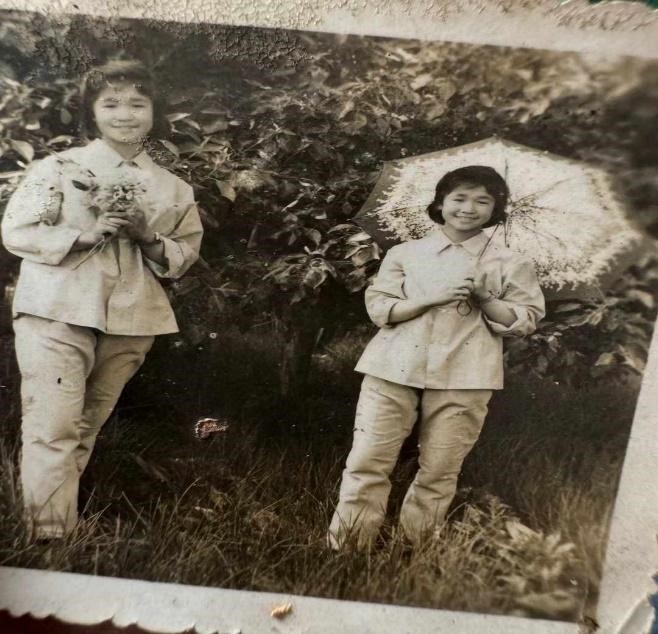
赵桂琴17岁带着玩具手表
Zhao’s 17-year-old wearing a toy watch
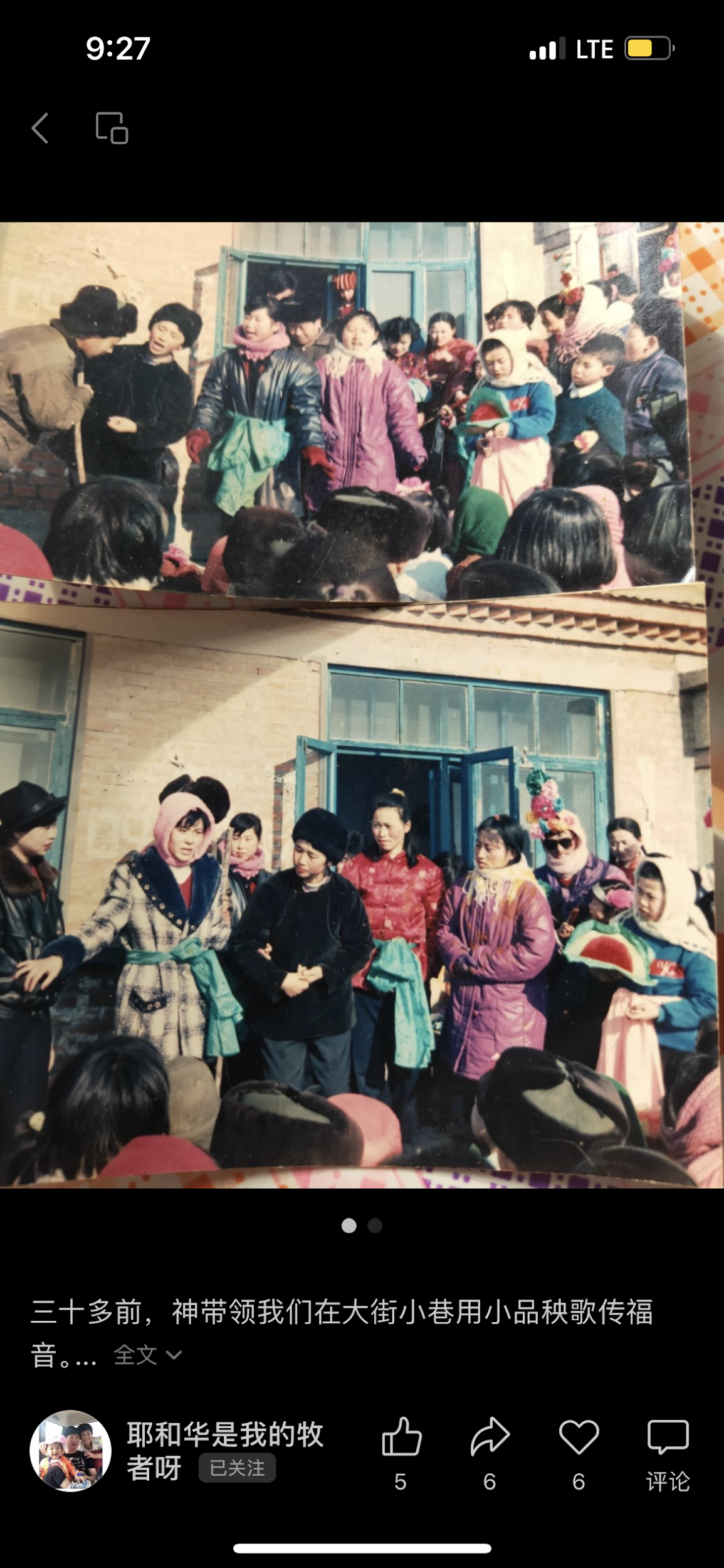
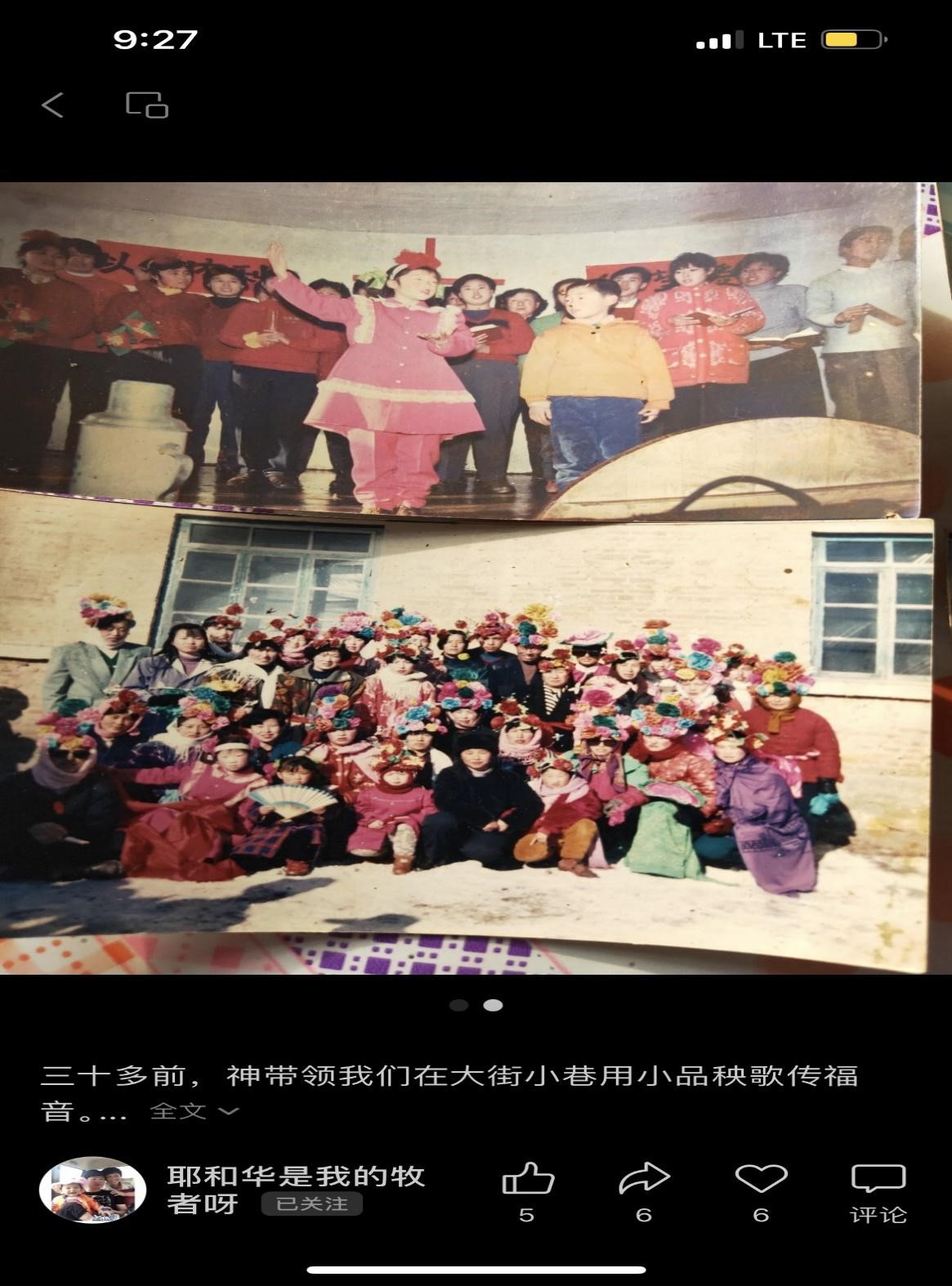
Thirty years ago, God used us to spread the gospel in the streets and alleys with the skit and Yangge dance.

吹奏巴乌赞美主
Play Bawu to Praise God

8月11日下午视频通话看到她脸上的荣光
During the Video Call on August 11, I saw the glory on her face
参考资料:
• https://www.
• https://www.youtube.com/
• https://www.youtube.com/
• https://www.youtube.com/
• https://www.youtube.com/